
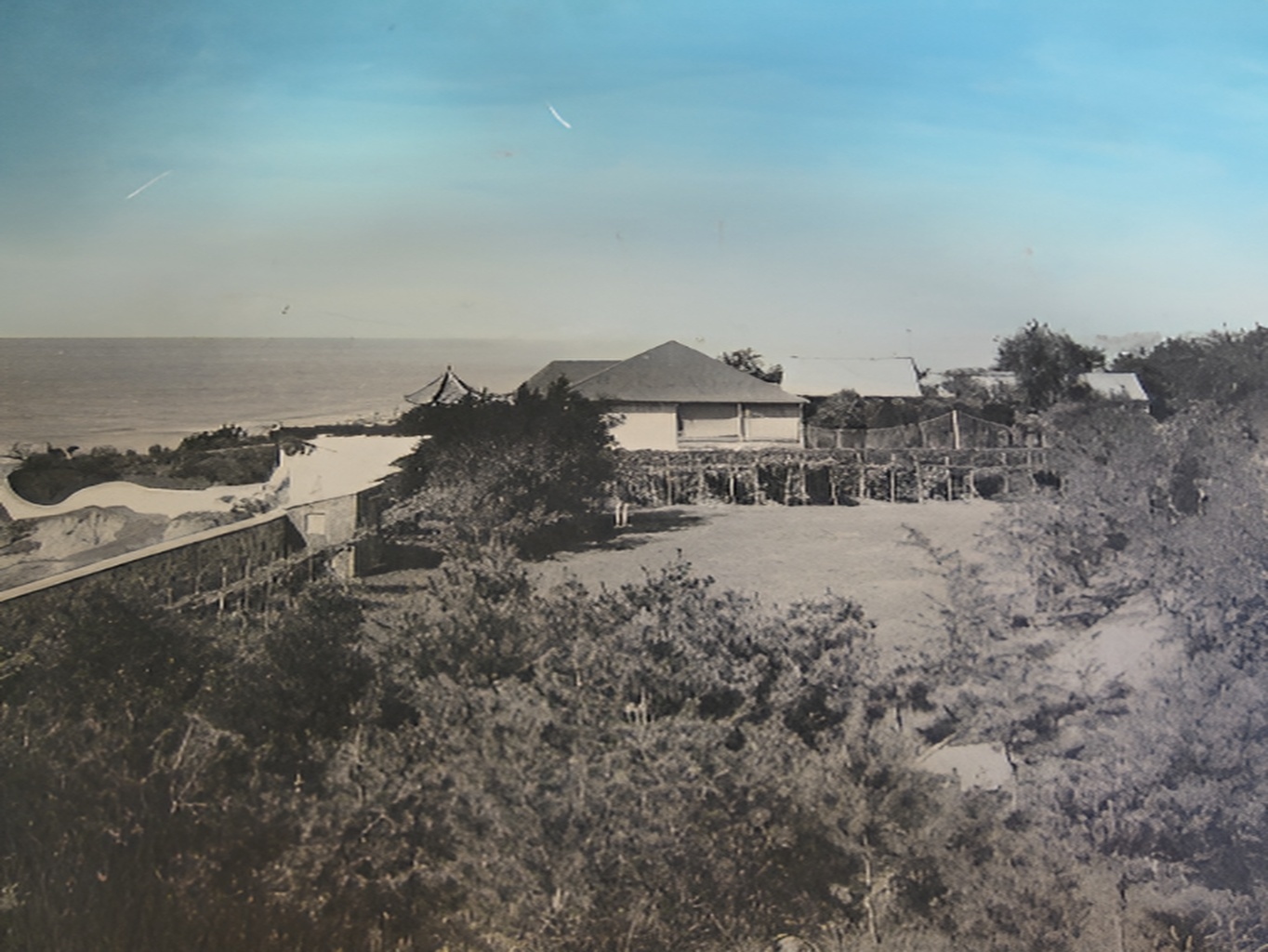
Alice Jean Woodward Allan (1897-1987) was born to Dr William Allan(1863-1920) and his wife Constance Maitland(1865-1921) in East Taieri. While it is generally known that she married Edward S Little (1888-1970) her somewhat exotic life in China is not.
Edward’s father, Edward S Little Snr (1864-1939) was born in Dorset, England (portrait on right). He was an extraordinary Victorian who lived through 4 monarchs and went to China as a missionary leaving for China shortly after marrying Caroline Bates. From that he evolved into a leading businessman being engaged by Brunner Monde in 1900 to set up their business in China. It evolved into ICI. He founded the famous health resort of Kuling, the first printing press in the Yangtze valley and negotiated the first republic for Sun Yat-Sen. He was also Australia’s first Trade Commissioner in China appointed in 1921.
Edward Jnr was born in China and lived much of his life there. He too was a distinguished personage. His first wife was Elizabeth C Forsyth (1888-1927) who was also born in China and indeed died prematurely in Tianjin in 1927 leaving two young children. In 1928 he married Alice. They had met probably early in 1927 at a mutual friends place in Hongkong (probably) where she had stopped on her way back to New Zealand from a visit to the UK.
They had two children – Patricia Allan Little (1928-2000) and Anthony (Tony) Allan Little (1934-2014).
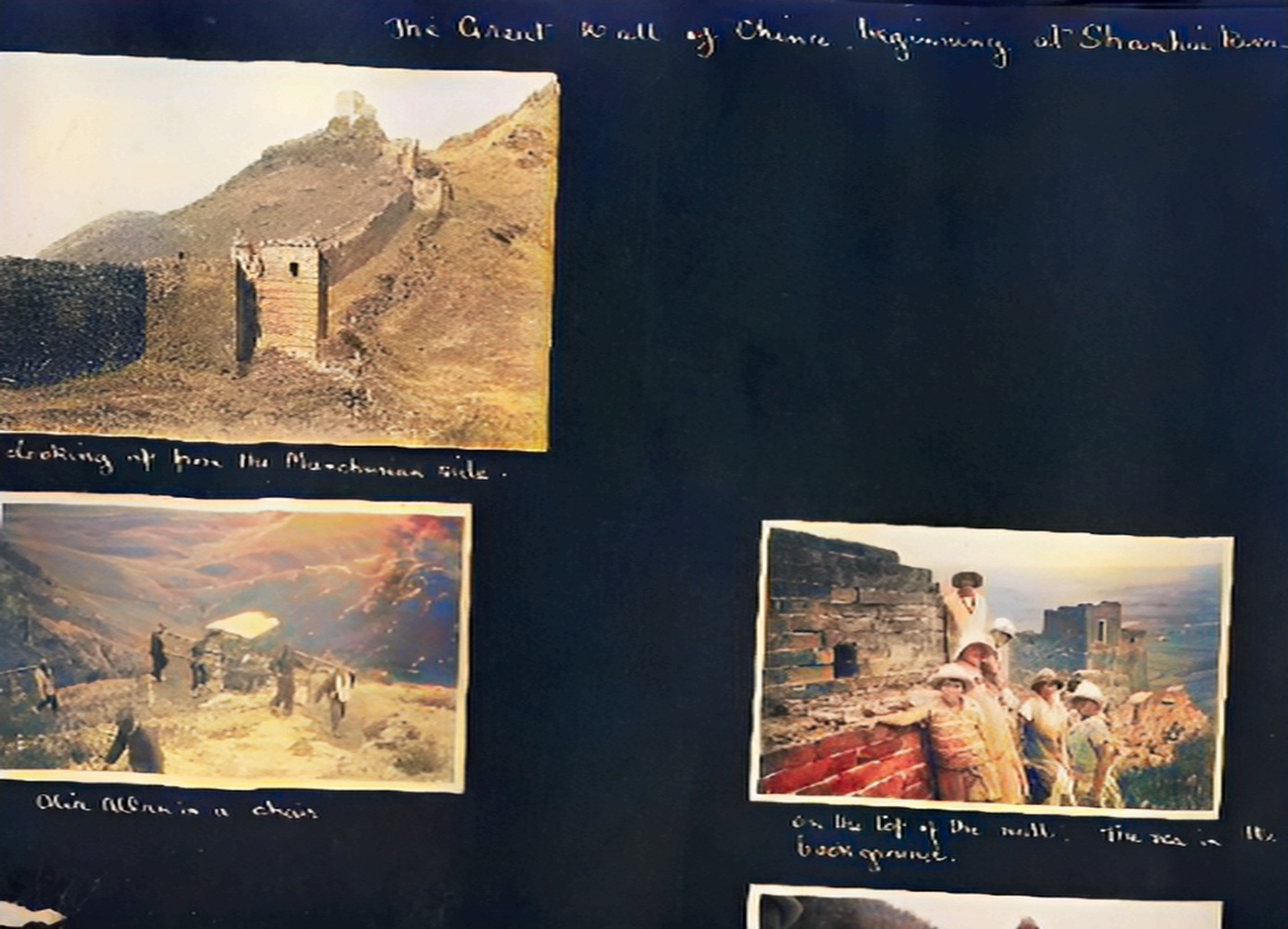
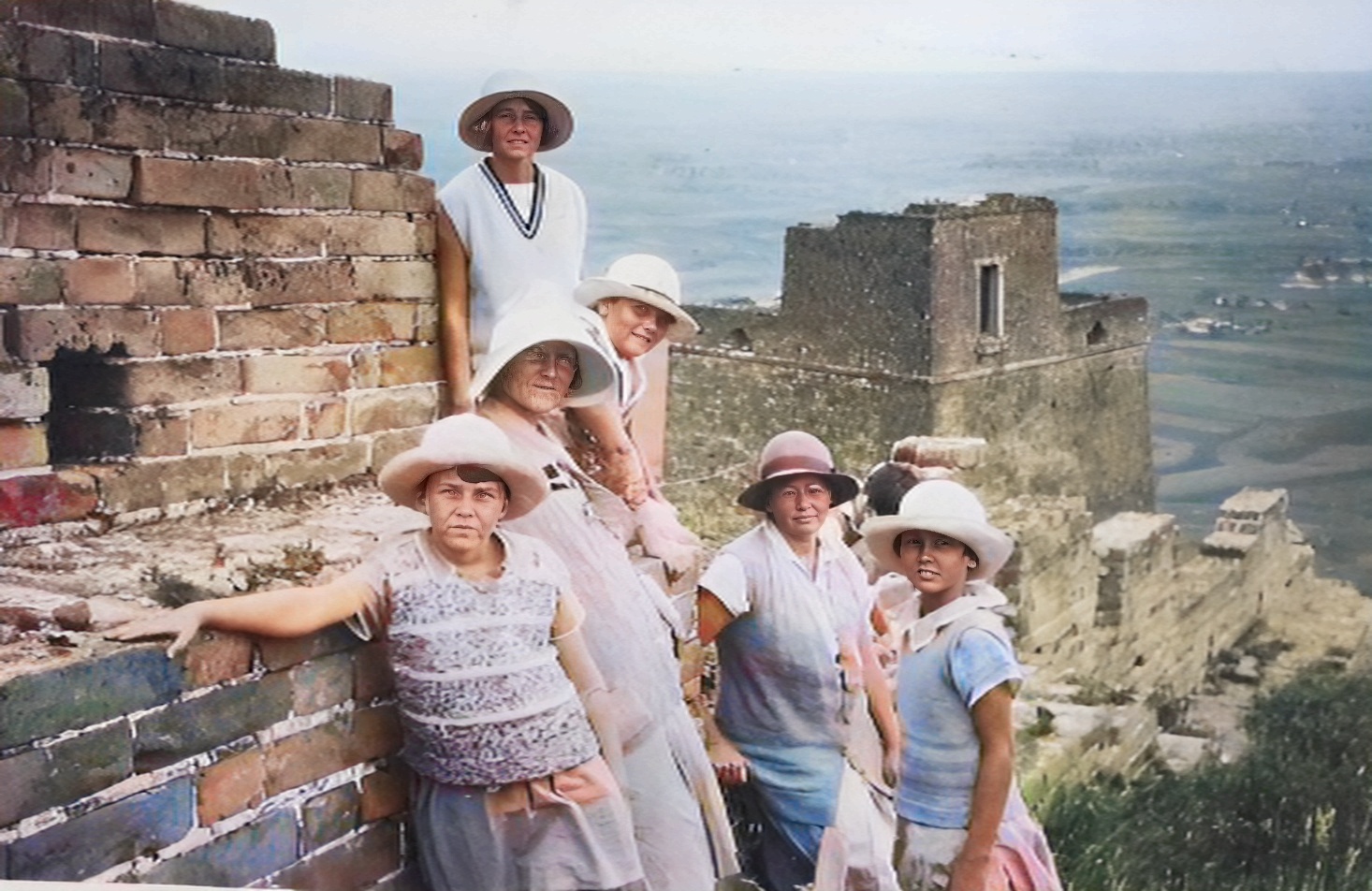
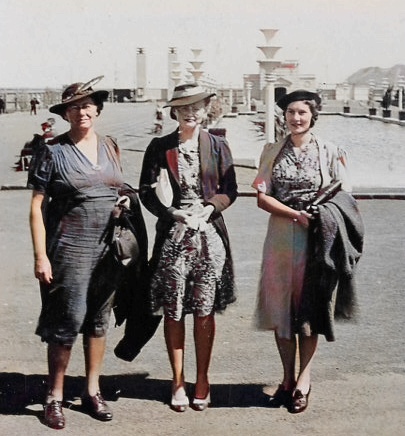
Socially they moved at the top level of Chinese society and knew all the major players of the time and travelled extensively. That said Alice had also travelled China extensively before her wedding including a trip to the Great Wall shown below.
The family had an emotional tie to Keri Keri in Northland as Edward senior had purchased a property there in 1928. Interestingly, he compiled a 120 page repport to himself on why to settle in Keri keri. He formed a partnership with a Mr Aldertone who formed the Auckland Land Development Co and later the Alderton Utility Co which generated Keri Keri’s power. He was also a pioneering orchardist. and built the district’s first packhouse. Edward Snr and Caroline went to Keri Keri each year in part to escape the severe Chinese winters. Their home Kingstone was of outstanding design.
Later Edward Jnr and Alice were to move to Keri Keri permanently.
Alice and Edward divorced around the late 1950s and Edward married again in 1960 to Jean Wardall (1909-1976). There is an interesting letter about the situation dated 1955 from Gladys, Hawkings, Edward’s sister which is included at the end of this section.
For all that Alice seemed to remain involved in a range of family activities before dying in 1987 in Northland.
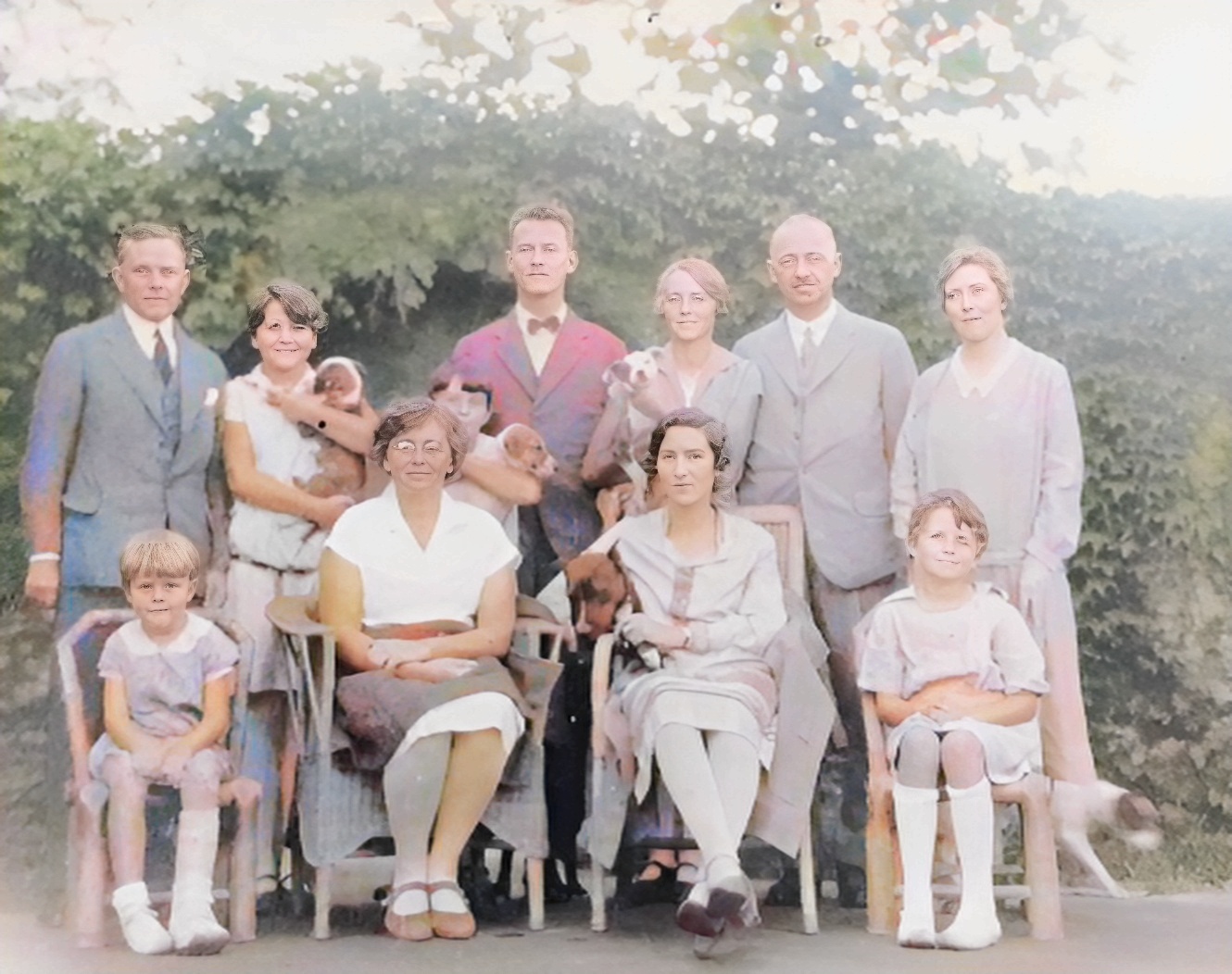
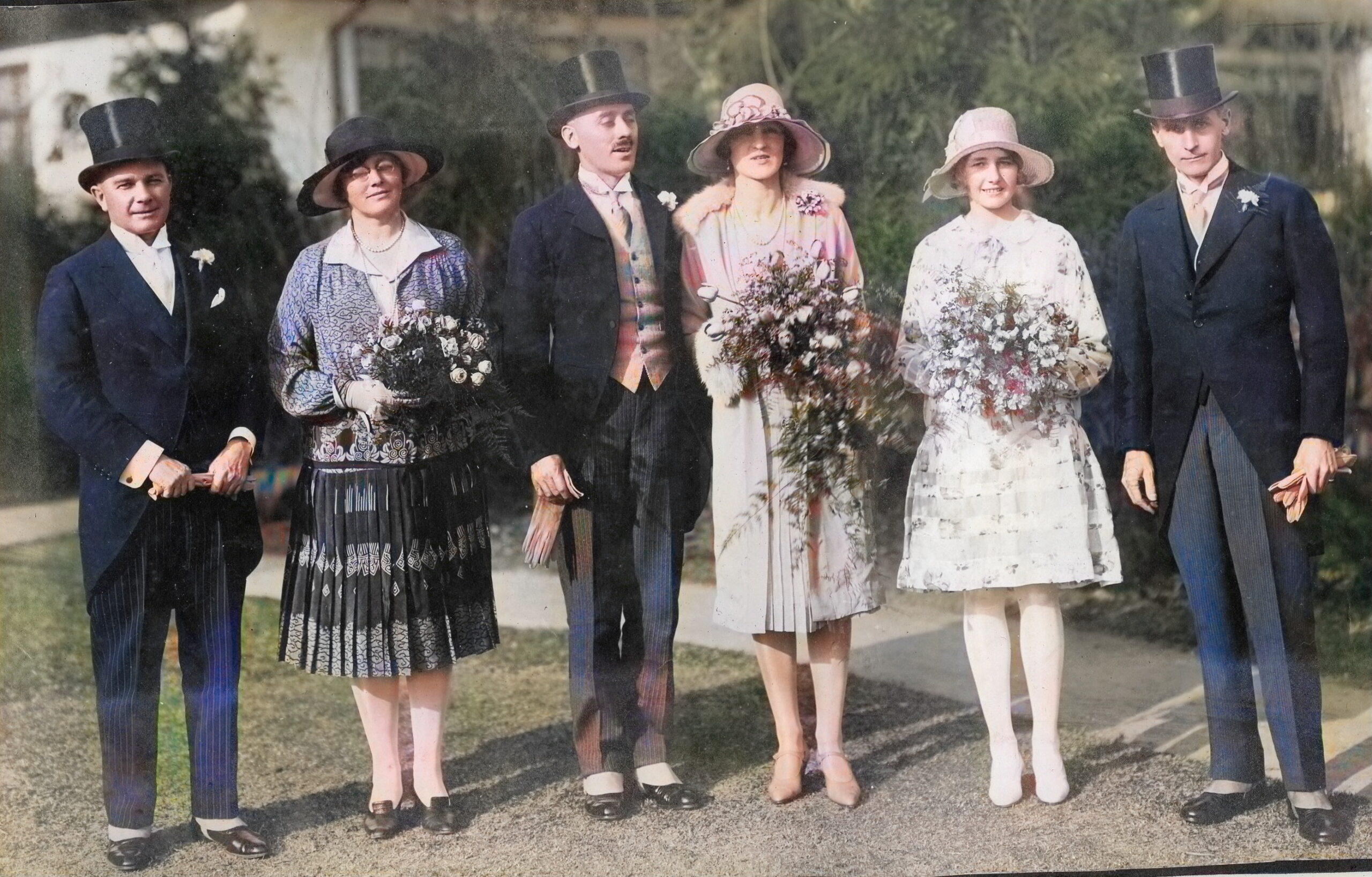
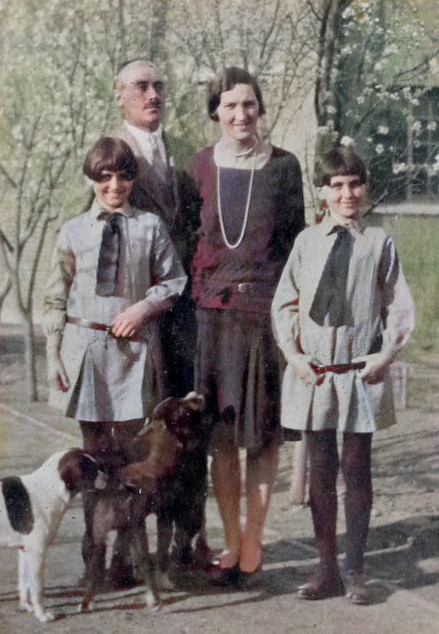
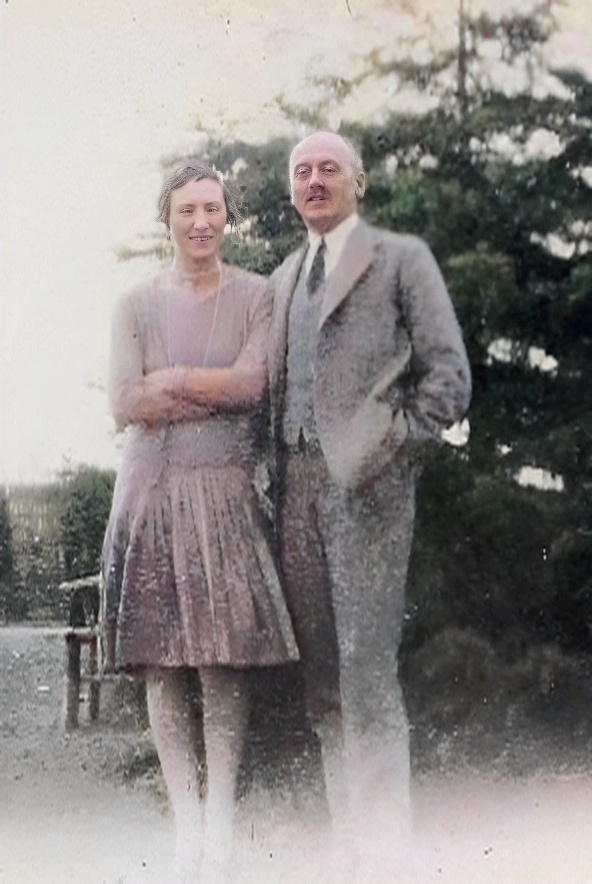
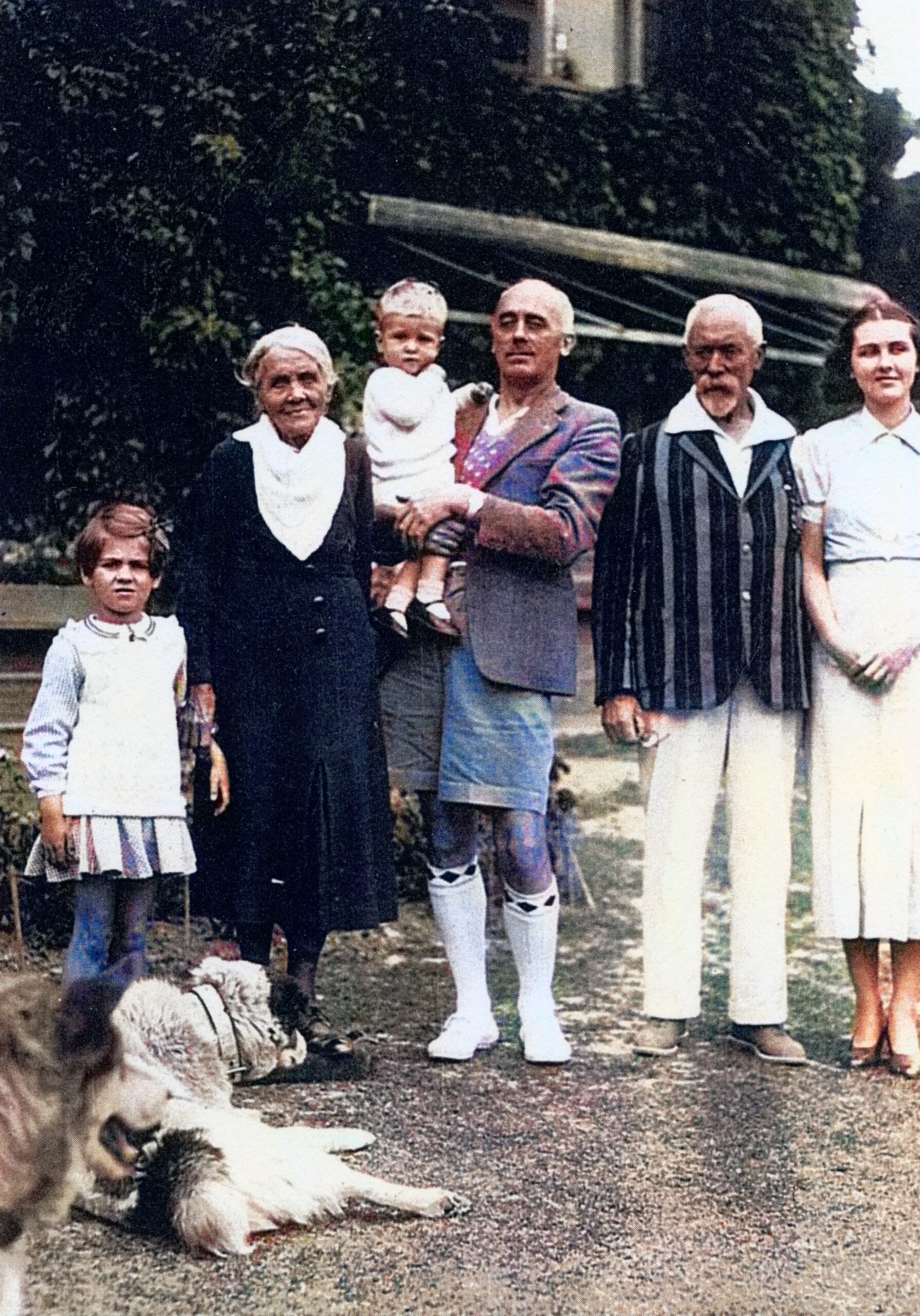
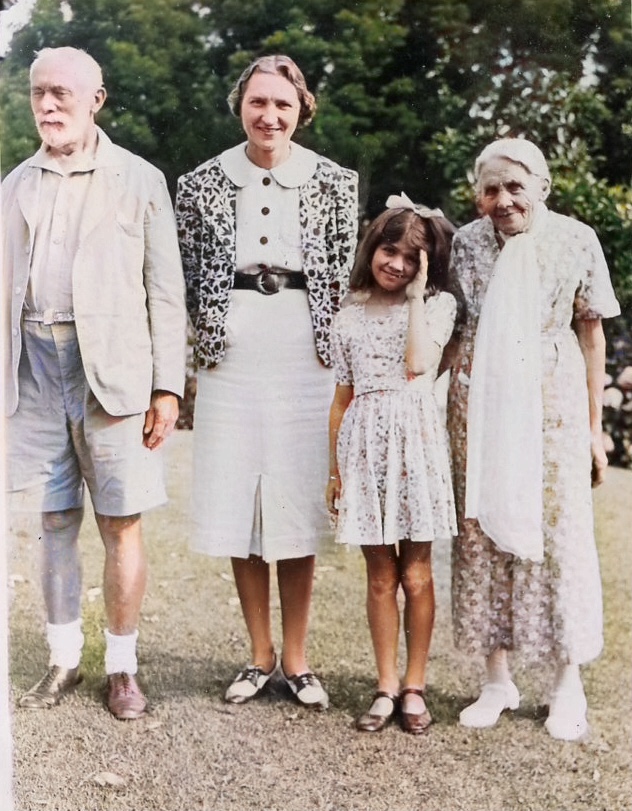
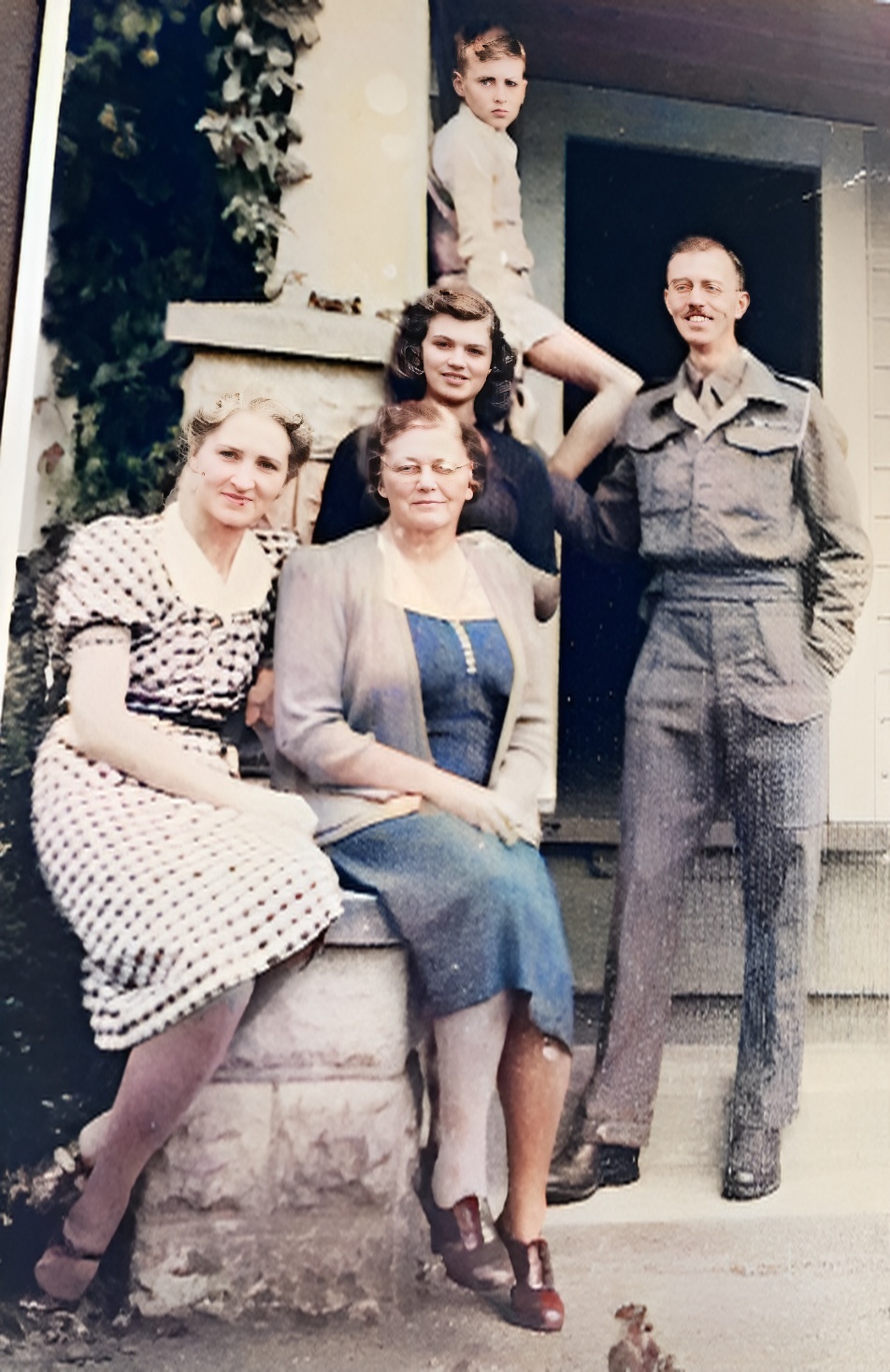
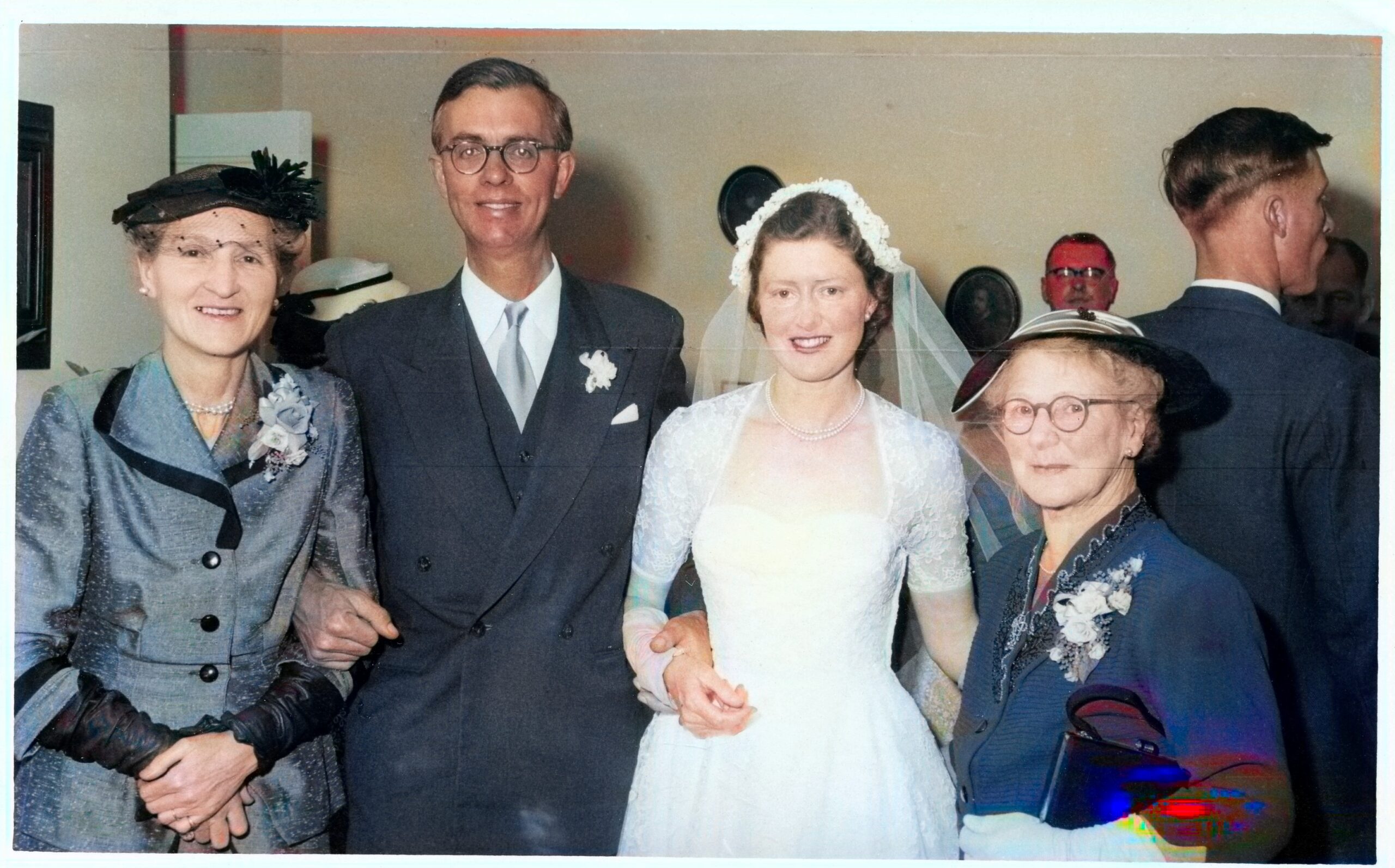
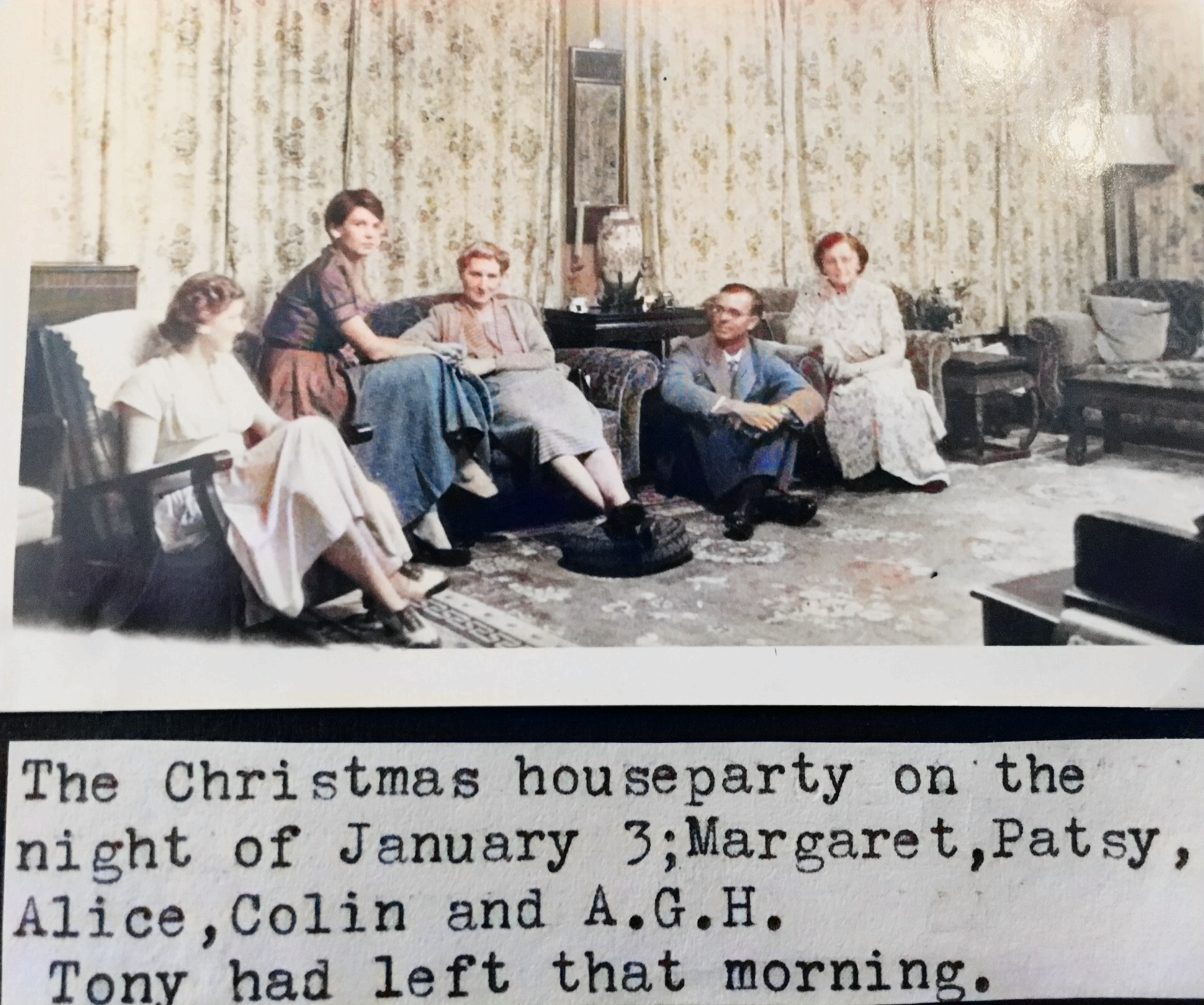
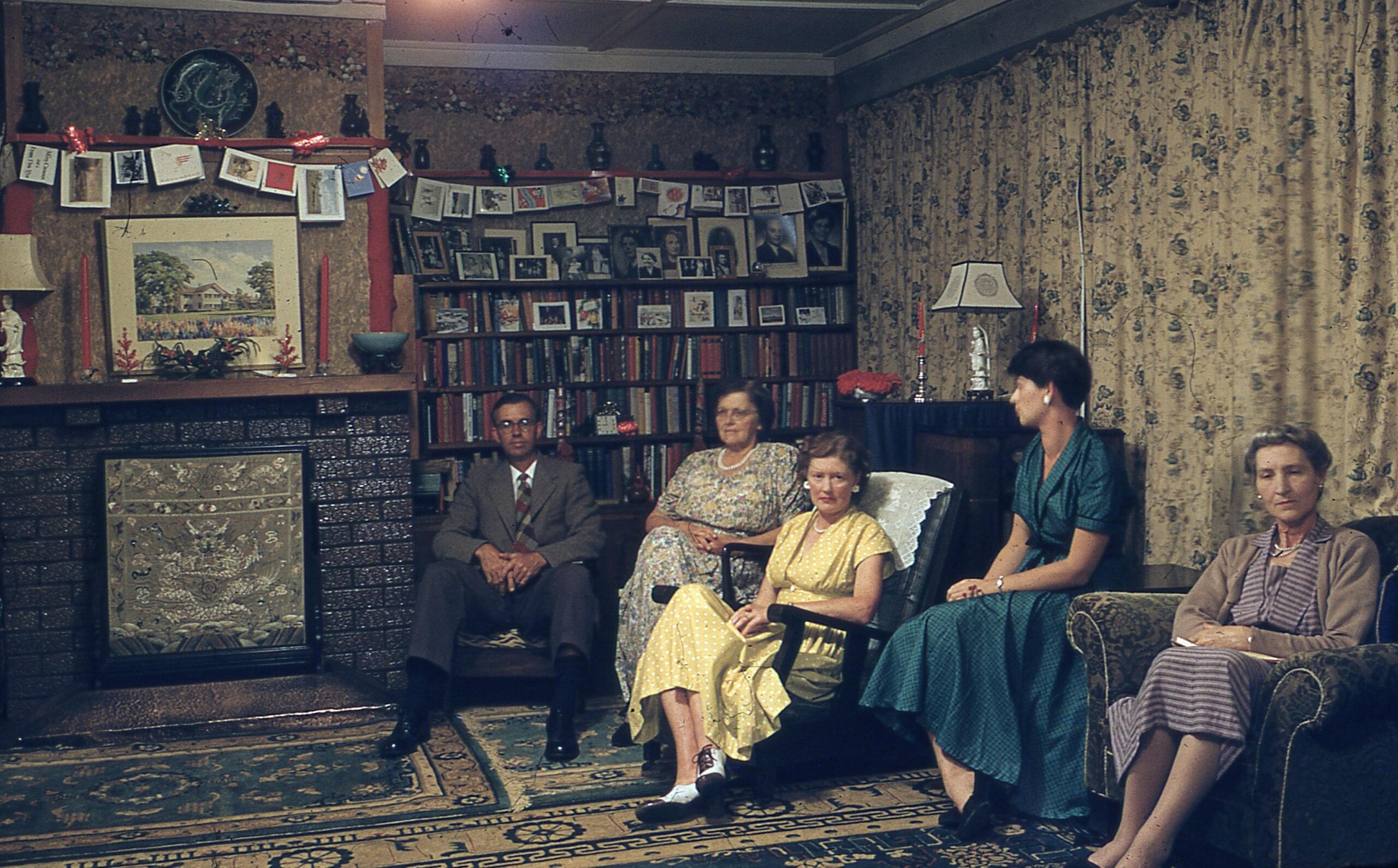
The photos below give some indication of Alice’s life. Following that is an article/interview with her from the ODT when she was in Dunedin in 1939. This is particularly interesting because it touches on life under Japanese occupation.

Your Content Goes Here

Extract from letter by Gladys Hawking nee Little to her daughters
Auckland, Monday, Dec. 17, 1965.
Darlings All, I am sitting at the window of the Grand Hotel looking out over the harbour to Rangitoto (the mountain island). I had my B.M.R. (Thyroid) test and heart cardiogram early this morning, and Dad had his X ray at 11:30 this morning & it made him so miserable he has been in bed ever since. Instead of taking Barium by the mouth, they inserted a horrid tube up his rectum and poured the barium up there and then X rayed it. It has made him terribly sore, poor man --I hope he'll be better tomorrow. We plan to drive up to Kerikeri Wed.a.m. We see Dr Sayers at noon tomorrow, to hear the verdicts, which I will add to this letter before posting it.
We had tea with Alice yesterday afternoon; she is still frail but better than when we left in March. She has had several abcessed teeth out, so that might have been the trouble. Both Dad and I had the same thoughts while we were there:- what a shame it all is. Alice is so charming and cultured and doesn't deserve to have to go through all this sordid business of a divorce. And then I felt guilty because I had more or less accepted Jean's pre-marital arrangement with Edward. The divorce seems to be hanging fire because Alice has to divorce him in N.S.W. as a divorce here would not be valid. For some time now, Alice's lawyer hasn't answered any of the letters of the Australian lawyer, and Edward wonders whether Alice has changed her mind! Meanwhile, Jean, whose lovely home in Penmerra we passed yesterday, has thrown up her comfortable life here (she has money) and her future to go and live with Edward, not knowing, poor dear, how very unreliable he is. Fortunately her brother and his wife know the situation, but were told that the divorce was definitely going through in 3 months and the marriage would then take place. They didnt approve, of course, but could do nothing about it. Jean has already been over there living with Edward for 6 months, and the divorce seems as far off as ever. I see tragedy ahead, and while Jean asked for it, still I feel desperately sorry for her. Edward has no friends at all, and so Jean has none over there, while here she had a busy social life.: They live in a horrid old bungalow in a dull suburb, a dark little place. Jean took some of her lovely silver and home effects with her, and does ever thing so and nicely and the house is immaculate. She said with pride how happy Edward is to have a home again after living in one room all these years. They seem very fond of one another, but the trouble is that I dont trust Edward. If he lets Jean down now, I shall never have anything to do with him again. I of course dare not talk to Alice about it, in case she asks me whether he is planning to get married again. Anyway, she has asked me not to mention the situation to her again as it upsets her so. So its an impossible position all around. I accepted Jean, and treated her properly, so as to help Edward do his duty by her. She is not a bad type,- I cant think why she agreed to live with him before the divorce. Edward must have some fatal attraction about him; but I dont see it. He certainly looks fine, & eats everything; Jean just laughs at his food fads. I am really very miserable about the whole business. (Melbourne) Lets go back to some of the things I missed telling you about. The night Dad felt so ill later, we went into a hotel next to the Cathedral for dinner. It was impossible to get a taxi or tram out to Burwood, till some of hundreds of thousands of people thronging Melbourne had left the city. So we nearly always had our evening meal first, and then transport was easier. We had never had a meal at this particular place before. We went up in the lift with an old man and lady and a young girl. At the door of the …………………..
LIFE IN SHANGHAI WAR-TIME EXPERIENCE
GRUESOME STREET SCENES DOGS FEED ON HUMAN FLESH "
At the moment life in Shanghai can be said to be fairly normal. There is guerrilla warfare and daily bombing, but what business there is goes on as usual. Present arrangements are for the children and myself to stay over here until the international situation becomes more reassuring." These remarks were made to "Phillida" by Mrs Edward Little, who, with her two children-Tony, aged four, and Patsy, aged eight -and their Russian governess has just arrived in Dunedin from China. Mrs Little has many friends here, for she comes of a well-known Mosgiel family. As Miss Alice Allan she went to Europe in 1924 on a two year's trip, accompanied by her sister. Constance, and Miss Marjorie Bird. She met her husband while on a pleasure trip in China. He was then associated with Imperial Chemical Industries, but now has his own business. When war broke out in Shanghai Mrs Little and her family were away for the summer months at their house at Peitaiho, a country seaside resort in North China.
"We were kept there for five months, knitting furiously, for it became very cold with the departure of summer, and the house had doors and windows in every wall and we had no winter clothes to wear. Our home in Shanghai was occupied by Japanese. My husband was endeavour- ing to remove our belongings under shell-fire, and was successful with several loads, but eventually the coolies had to abandon the work. The place was a shambles for a while. My hus band had to step over the bodies of ten dead Chinese in order to get to the house. He would not let me look, but on another occasion I saw a worse sight-the starving Chinese street dogs feeding on human flesh." Those Europeans, Mrs Little said, who were lucky enough to have houses in the country retired to them with what belongings they could salvage, while others were evacuated to the International Settlement in Hong Kong, whither the English troops were withdrawn. No one was allowed about the streets on foot after the curfew at 10.30 (later the time limit was set at 11.30, and, as the fighting became less intense, 12.30). "The amusing part about it was that you could drive about in a car after this hour, but walking was forbidden. When the refugees began to pour into Shanghai in their thousands they had, perforce, to sleep in the streets, and so long as they lay down and did not attempt to walk about they were not sent to prison."
Poor Organising Ability
The weaknesses on the side of the Chinese, Mrs Little said, were their poor organising ability and their dis loyalty, though they were improving in both these respects. She did not think such a vast country could ever be completely conquered by the Japan ese, a people she described as "not only resentful of criticism. but quick to take reprisals."
Beta
One of Mrs Little's three stepdaughters, an attractive girl of twentythree who refused to be evacuated to Hong-Kong, but stayed behind and helped on the Evacuation Committee, has the distinction of being the only woman to have dined at the Shanghai Club-the most exclusive men's club in the world, and one which is also famous for having the world's longest bar. In the course of a week of very useful work on the committee she was taken to have a much-needed sound meal at the club-"and what an outcry next morning from the members!" Mrs Little said. The newcomer waived the inference that she would be glad to stay a while in a safe country. "On the contrary I am not pleased about it at all. I love China. For one thing you can get an English garment there for half the price you have to pay for a similar garment here, when it's a New Zealand-made one, too! In China there is 75 per cent. duty to pay on all finished goods, yet they are infinitely cheaper than these.
No. I should not like to live here for long. Life is very difficult for a woman in New Zealand, with domestic help so scarce and expensive. She has no time to think about much else but housework
. Scope for Social Work
"In China there is much more freedom. One can bake, but not unless one wants to; one can garden or arrange the flowers, but not unless one wants to-there are six or seven willing servants who are past masters a' any of these duties. The European woman in Shanghai generally breakfasts in bed, but her day need not be idle. There is always plenty of scope for social work in China, and more recently there have been sewing-bees for the refugees, or camps to assist in. Entertaining at one's home is a smooth and pleasant affair. The larger the number of guests for dinner the better are the servants pleased, and the harder do they work, partly breakfasts in bed, but her day need not be idle.
There is always plenty of scope for social work in China, and more recently there have been sewing-bees for the refugees, or camps to assist in. Entertaining at one's home is a smooth and pleasant affair. The larger the number of guests for dinner the better are the servants pleased, and the harder do they work, partly because there is a ubiquitous practice among the coolies of "squeezing a little extra" on such occasions, and also because of the honour it brings on the house. When there is a dinner party the kitchen is generally in an uproar. "The gardener, coolies-even the servants from the house of a neigh- bour-come to help prepare the feast. The meal may not be ready by 9 (8 o'clock is the usual hour in China) or even 10, but when it emerges it is perfect in every way and well worth waiting for. The Chinese love children, and they worship small boys in particular. If work has been left undone you may be sure there is but one reason for it- that the little master wanted to play horses."
Mrs Little and her family left China at a week's notice, and from the day they left Hong Kong, where they suffered the trying discomforts of typhoon weather, to the day they reached New Zealand their journey was fraught with difficulties. At Australia the officials declared that the governess had cholera, which was eventually proved untrue, but not before the fuss that ensued, the inconvenience of quarantine, and the anxiety with regard to her children made it imperative for the traveller to spend some time in a nursing home before coming on to New Zealand. At Auckland, where they subsequently spent some weeks, more red tape was encountered due to the nationality of the governess, so that it will be with relief that the new comers find a flat and settle down to some routine. Patsy, the little girl, will attend school again after an interruption of two years owing to the trouble in the East. The many Dunedin friends of Mrs Little will be interested to know that her three sisters are all living in London. They are Mrs George Gibb (who married a son of Dr Gibb, of Welling- ton), Miss Ruth Allan, who lives at Gilford, and Mrs Basil Browning, whose husband is a well-known doctor in Knightsbridge.
LIFE IN SHANGHAI OTAGO DAILY TIMES, ISSUE 23733, 14 FEBRUARY 1939